Sunday, 11 October 2015

Sound


  • Dialogue- is the words and conversation spoken by characters. The diaglogue can be different depending on thr theme as well as the topic the dialogue is on. In this diaglogue from Of Mice and Men, George and Lennie are having a serious conversation. How Lennie has stolen something from one of the other guys at the ranch and Georgw is preparing himself to kill Lennie. 
  •  
 
  • Voiceover- is sound spoken by someone off screen, it is often used to narrate a story. A voice over gives us extra information of what happens during the movie which we haven't already heard of from the characters or more detail of what has already happened . In a series of unfortunate events this is shown  even though its a trailer from the begining until 0:40 we are getting more detail than what is being shown.
     
  • Soundtrack- Music used in a film or TV dram. This music is produced specially for that particular movie or television show. The soundtrack for what its been created for is suppose to set the mood and match the events in the movie. There are some short tracks made for a small part of the movie. For example the Harry Potter soundtrack are made to suit the mood like the prologue track it sounds all mysterious which suits the Harry Potter movies perfectly.
 
  • incidental music- Background music that adds to the atmosphere. This is when the music suits the mood of the scene which the character is in at that moment. This caan represent so much of what has or is going to happen. In Harry Potter and The Deathly Hallow Part 2 the music comes as they are getting ready for the battle its building up to a big event.


  • Ambient sound- Sound present in the background of a scene. This shows up the current mood of the scene and how all the characters within that scene also feel. For example in Mr Bean's Holiday after everything he has been through on the journey when he finally find the beach this sort of joyful music starts to play. This tells us the audience that he is happy.
     
  • Diegetic Sound- Sound whose source is visible on the screen or whose source is implied to be present by the action of the film. One example of a Diegetic Sound is a diaglogue as we can see the characters speaking to eachother.
  • Non- Diegetic sound- Sound whose source is neither visible on the screen nor has been implied to be present in the action. One example of a non - Diegetic sound is when a narator is speaking as we don't know when they will and we cannot see their character either.

Camera Angles

Extreme close up shot from the movie Avatar with Jake Sully

This extreme close up shot shows intesity of the current scene at that moment. We can tell that the director is trying to portray an intense feeling as we can see all the small details such as the colour diferentiation in the iris, we can see all the detail like the lines and where the colour starts to change. Another small detail which allows us as the audience to see that it is an intense feeling is that we cam see is each and every single hair for the eyelashes and eyebrows.


Long shot from spiderman with Peter Parker (Spiderman)

The importance of this being a long shot is that we start to get an idea of the character's environment. Long shots usually tend to introduce the begining of most scenes. This sets the motion and well as the audience's perceppttion of tim, place and logical action of the scenethat is about to be revealed  through the long shot. The way that he (Peter Parker/Spiderman) is leaping shows that he is rerady to save the next city's victims from whatever it is that they are facing. This keeps the audience hooked in as they want to know what happens next to the victims of the city that is in danger.


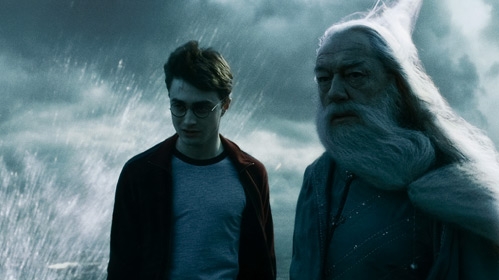
Medium shot from Harry Potter and the Half Blood Prince with Harry Potter and Dumbledore 

A medium shot usually shows the character(s) from their waist and above. These shots help to show people in the context of the background. The medium shot should generally contain all the action of the scene, it should also be well matched with the flow of the long shot. The importance of this specific picture being medium shot is that we can understand the emotions that the characters in this scene are facing and it allows it all to come together.


 Extreme longshot from The Hunger Games

An extreme close-up of a face, for instance, would show only the mouth or eyes. it is used for dramatic effect. An extreme long ahot tends to show a large amount of the scene/landscape. It is used at the beginning of a scene or a film to establish main place. In this scene of The Hunger Games they are about to pick the tributes, in this scene an extreme long shot is effective because it shows the tension, as it shows the whole scene the dark and gloomy colours sets the mood.

 
Aerial shot from Jurrasic Park


An Aerial view is a shot is taken from someone is a helicopter or someone at the top of a building.The importance of this picture being shot by an aerial view is that the audience gets a sense of direction of where the movie is set. In this shot there is a lot of greenery in this shot, the greenery represents what genre the movie will be which is action/adventure, it also shows which obstacles they may face along the way.


Point of view shot from Harry potter and The Philosopher's Stone

A point of view shot usually shows it from the actors/actresses perspective. Its usually edited in a way so that the audience can understand whose perspective its from. This is the scene from Harry's first game where he has caught the snitch for the first time. In this case a point of view shot shows importance as this is the first time he has caught it, it made so many people happy because Harry had just won the game.


Over the shoulder shot from Mean Girls with Cady Heron & her parents

An over the shoulder shot is whenits taken from someones prospective it is usually done over someones shoulder. In this scene from Mean Girls it is Cady Heron's (portrayed by Lindsay Lohan) first day at school this shot has been taken from her parents view. They are wishing her good luck on her first day as it is her first day of public school as she has never been to one. As an audience we can understand the excitement as well as her patents who we can tell are also a bit anxious. 


Birds eye view from The Avengers
A birds eye view is a shot which the camera takes from directly overhead. This makes it if as the audience are looking directly down at the scene. However in this birds eye view as the character is infront of the scene it makes everything else below seem less important, at this point the main focus is the character and what he is doing at this point.


Close up shot from the karate Kid with Daniel

This is a close up shot, a close up shot show the characters face, it tends to show all the possible emotions. In this scene Daniel is about to fight in the karate tournament. From this shot we can tell that Daniel is determined to win. 
 

High angle shot from Harry Potter and The Order Of The Phoenix with Harry Potter

A high angle shot is when the camera looks down upon the subject. By looking down on the subject it makes it seem as if they a vulnerable. This shot is usually used to show someones perspective. In this case Harry has found himself in a difficult situation where the dementors are after him, Harry feels vulnerable to the dementors. 


Low angle shot from Matilda with Miss Trunchbull
A low angle shot is the complete opposite from a high angle shot. Instead of the showing how vulnerable the character is its shows how powerful the character is, this may allow the audience to get a real sense of how tough this character may be. In this case Miss Trunchbull is feared by all, she always carries a whip with her making her seem even more powerful




Thursday, 8 October 2015

The 180 Degree Rule

The 180 degree rule is when is when you film a scene using two different shots. The camera doesn't move more than 180 degree around the characters. This allows the audience to understand where everything in the shot is. 

For example if you were to  shoot a conversation between two people looking directly at each other the line which the axis of action is an infinite line that connects their two faces. 


 An example of a 180 degree is shown in the shot below, this is from Harry Potter and the Deathly Hallows Part 1. This is between Harry and a man who wrote an article for the daily prophet. This shot allows the audience to see what is happening between both characters at that point. The 180 degree shot allows us to see that they are having a serious conversation, we can understand this as they have direct eye contact with each other. This shot also allows the audience audience to see its a serious converstaion through the characters facial expressions.


Transitions

Keywords for transitions:

These are  the 16 most important transitions:


Cutaway: This is the interruption of a continuously filmed action by inserting a view of something else. An example of this is shown in Doctor Who - Last of the Time Lords.
https://www.youtube.com/watch?v=JeyqhxVNXIs

Cutting: The most basic type of shot transition, it is the most common way to join two shots. There is an example shown on this video.
https://www.youtube.com/watch?v=fnNMaR7fyEs

Composition: The arrangement of visual elements within the frame, for clarity, balance or aesthetic effect. There is an example of a composition transition in the link below
https://www.youtube.com/watch?v=2lhX0uGf34g

Depth of field: The range of objects in focus, that are of particular importance in the film. This transition is shown in this short video.
https://www.youtube.com/watch?v=uAGi6ij985Q

Dissolve: This shot gradually changes the visibility of the picture. However, rather than transitioning from a shot to a colour, it is when a shot changes into another shot gradually. It can be used to create a link between two different objects, a man telling a story, and a visual of his story, for instance. A dissolve transition is shown in the video below.
https://www.youtube.com/watch?v=Rt5mcZFYLng

Dolly Crane: This shot is from a camera on a crane, which can move horizontally, vertically or diagonally from a high to a low position. It can be used to draw the audience right into the centre of the action. This video demonstrates how this transition works and what it looks like.
https://www.youtube.com/watch?v=CWSYIs9llL4

Fade: This occurs when the picture gradually turns to a single colour, usually black, or when a picture gradually appears on screen. This video demonstrates a fade transition.
https://www.youtube.com/watch?v=crZBD9Ptcds

Focus: How clear an image is. If it is in soft focus, it is usually blurry, this is usually used for Romantic effect. As in this video they are only testing this transition its not for a romantiic scene. 
https://www.youtube.com/watch?v=dP-34xix9cA

Jump cut: This cut is usually the result of a continuity error, and not a stylistic choice by the director. A jump cut occurs when a cut, designed to act merely as camera angle change(less than 30-degrees), reveals a continuity error between two shots. This video shows many examples of this transition. 
https://www.youtube.com/watch?v=K2GPBBxFpEw

Pan: Originally panorama- meaning view. This is a horizontal movement left or right by the camera on a fixed axis. It gives a more extensive view of the location. This video demonstrates on how the transition is done and what it looks like in the end.
https://www.youtube.com/watch?v=Ad2IxHWd1wY

Parallel Editing: This is the technique of alternating two or more scenes that often happen simultaneously but in different locations. This is shown in this video of The Godfather.
 https://www.youtube.com/watch?v=S_I82117oAw

Steadicam/Handheld: A camera that is on a lightweight counterbalance harnessed to the camera operator, producing a smooth, flowing show which can follow action. This is demonstrated in the video below. 
https://www.youtube.com/watch?v=1gcv8NKrGzw

Tilt: A movement of the camera, either up or down on a fixed axis to afford a high or low view by movement. In this video we see what a tilt transition is.
https://www.youtube.com/watch?v=Slu6Leds5IA

Track: The movement of a camera(usually on a tripod with wheels, on a track) which creates the smooth following of a character. In this video we see a track transition.
https://www.youtube.com/watch?v=8nShO6oneQM

Wipe: This transition involves one shot replacing another, travelling from one side of the frame to another. Think of a vertical line passing from the right side of the frame to the left. On the left side of this line, we have shot A, and on the right side of this line is shot B. When this line reaches the left edge of the frame, shot B will completely fill the scene, and the transition is complete. In this video we see an example of a wipe transition.
 https://www.youtube.com/watch?v=lVW_fdPVQHQ

Zoom/reverse zoom: The camera is fixed and a zoom lens is used to move in closer (at variable speed), or out further away from the subject. This is used to involve the audience or to focus the expression of a character, by zooming into a close-up, to heighten suspense. We see an example of this in the video from Spiderman.
https://www.youtube.com/watch?v=h0xiCIMIwLY

Brief

Main task: the titles and opening of a new fiction film, to last a maximum of two minutes. 
All video and audio material must be original, produced by the candidate(s), with the exception of music or audio effects from a copyright-free source. Both preliminary and main tasks may be done individually or as a group. Maximum four members to a group.